Speakers
Ian Godber

Plenary
Chair, Ian Godber
What if the greatest risk in a clinical laboratory is not a failed test—but a moment lost in the process?
In high-acuity environments, every sample carries urgency, yet workflows have long relied on paper trails, manual transcription, and fragmented communication. Samples moved, but not always with full visibility. Critical results were generated, but their impact depended on timely human relay. The status of pending or add-on tests often remained uncertain. These unseen gaps, though routine, shaped the speed, clarity, and reliability of clinical decision-making.
This changed through a journey that started with intent in July 2021 and continues to evolve, reaching multiple milestones along the way. Rather than adapting to limitations, the laboratory reimagined its workflow from within. Through close collaboration between laboratory and IT teams, a fully digital, home-grown ecosystem was developed in phases. A real-time electronic specimen log replaced manual registers, enabling complete traceability from collection to reporting. This was followed by an intelligent result indexing system that transformed analyzer outputs into dynamic, prioritized workflows—bringing critical values and high-risk samples into immediate focus. Integrated alerts, second-opinion pathways, and seamless communication tools redefined how teams interacted with data and each other.
Each milestone translated into meaningful impact. Sample visibility became absolute, turnaround times improved significantly in critical care pathways, and communication of critical alerts reached 100% compliance. Paper consumption dropped by over 80%, advancing environmental sustainability. More importantly, the laboratory evolved into a responsive, transparent, and resilient system—demonstrating that when innovation is built with intent and sustained through continuous milestones, digital transformation becomes a living journey, not just a destination.
Learning outcomes:
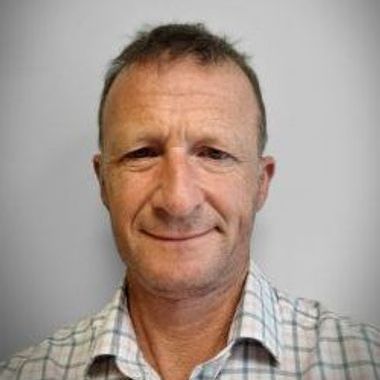
Ian trained in Clinical Biochemistry in Dundee and Nottingham, then moved to NHS Lanarkshire initially as a Principal biochemist, and was later appointed to a post as Consultant clinical scientist and Clinical lead, where he developed an interest in laboratory processes and IT.
He was the Clinical lead for the Scottish Clinical Biochemistry Managed Diagnostic Network from 2016-2020. He moved into his current role as Consultant clinicalsScientist and Lead clinician in Biochemistry at the QEUH in Glasgow in 2020.
Ian has been a senior examiner in Clinical Biochemistry for the Royal College of Pathologists for a number of years. In 2025 Ian took up the role of President of the Association for Laboratory Medicine and will be the Congress president for EuroMedLab when it is held in London in 2027.